Relatively interesting, albeit cursory, article in the Times about the rises and falls of development in New York City. The fate of New York as the United States cedes its empire grows more interesting by the day. Anybody have any recommendations for articles on the rise and fall of great cultural capitals? I think that a cross-disciplinary (ethnographic, financial, political, architectural) study that both analyzed and brought to life the relative rise and fall of great cities through time would be fascinating.
Showing posts with label culture. Show all posts
Showing posts with label culture. Show all posts
Sunday, March 15, 2009
As We Go Up, We Go Down
Relatively interesting, albeit cursory, article in the Times about the rises and falls of development in New York City. The fate of New York as the United States cedes its empire grows more interesting by the day. Anybody have any recommendations for articles on the rise and fall of great cultural capitals? I think that a cross-disciplinary (ethnographic, financial, political, architectural) study that both analyzed and brought to life the relative rise and fall of great cities through time would be fascinating.


Saturday, September 27, 2008
Paul Newman, RIP


Does anybody represent what was great about America in the second half of the 20th century more than Paul Newman? In movies and in real life? Will be sorely missed...
An appreciation from NYT.
Two more rememberances, from Stephen Metcalf and Dana Stevens, on Slate.com. Metcalf puts it close to the mark with this closing bit:
Paul Newman reminded us—with a smile, a twinkle, a total economy of gesture—how infrequently the beautiful are comfortable in their own skin, how infrequently the elect are gracious. He enters, and immediately, the pantheon of Grant, Tracy, and Stewart, for reminding us of that magical Emersonian place, of America in its own imagination of itself, where the superhuman and the all-too-human become indistinguishable.
Saturday, September 20, 2008
One Hundred Years From This Day...
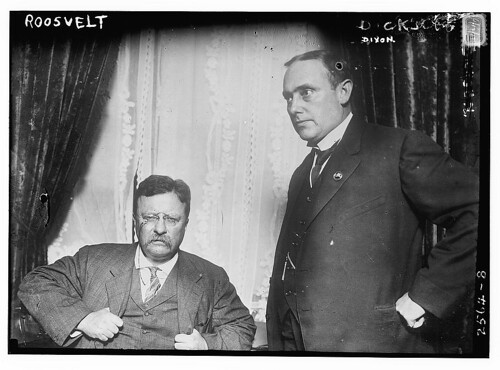
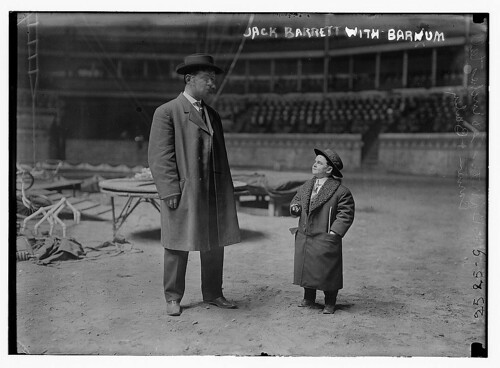

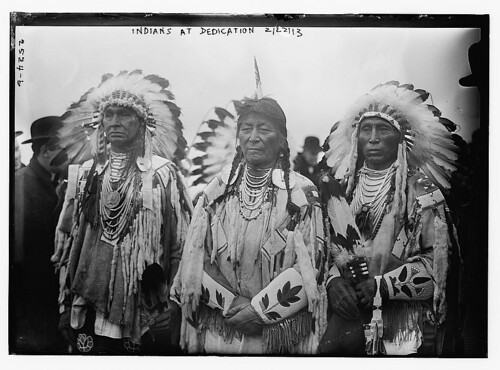
 The Library of Congress's excellent Flickr page has a collection up called News from the 1910s. Lots of striking photos in the set. The photos above include Teddy Roosevelt, P.T. Barnum, William Jennings Bryan, and two entitled "Indians at Dedication" and "Bulgarian Giving Water to Dying Turk, Adrianople." How far we've come, from a world on the brink of tumult, a nation demanding to be entertained, and presidential candidates laying claim to the need for reform in government.
Justice Stress
I am not particularly a fan of Justice, but DL sent around a link to the video for "Stress" from his trip to BUG 09 in London and, having not seen the video before, damn. Pretty raw stuff, even if contrived for the video. I guess I'll relate the strange and senseless act of violence that I was tangentially involved in a few weeks ago, but living in New York city in 2008, sometimes you forget that the world can still be a pretty bleak and violent place.
Thursday, September 18, 2008
My Gal: Saunders on Sarah Palin
From The New Yorker, in case you missed it. An excerpt:
Explaining how she felt when John McCain offered her the Vice-Presidential spot, my Vice-Presidential candidate, Governor Sarah Palin, said something very profound: “I answered him ‘Yes’ because I have the confidence in that readiness and knowing that you can’t blink, you have to be wired in a way of being so committed to the mission, the mission that we’re on, reform of this country and victory in the war, you can’t blink. So I didn’t blink then even when asked to run as his running mate.”
Isn’t that so true? I know that many times, in my life, while living it, someone would come up and, because of I had good readiness, in terms of how I was wired, when they asked that—whatever they asked—I would just not blink, because, knowing that, if I did blink, or even wink, that is weakness, therefore you can’t, you just don’t. You could, but no—you aren’t.
That is just how I am.
Do you know the difference between me and a Hockey Mom who has forgot her lipstick?
A dog collar.
Do you know the difference between me and a dog collar smeared with lipstick?
Not a damn thing.
We are essentially wired identical.
Tuesday, April 22, 2008
Rave: 30 Rock/Tina Fey
Two weekends ago, it was a beautiful Saturday evening. What did I decide to do? My taxes. What did I actually do? Watch the entirety of Season 2 of 30 Rock on Hulu. [Quick aside: I was skeptical on Hulu as a service, but so far, I'm sold. If advertising is a necessary evil, I don't mind the pre-roll and interspersed 30 second clip model, while watching programs on my computer. Don't let it dissuade you, advertisers, but I check my email and the internet while you tell me about Ragu spaghetti sauce. But don't worry. I already knew about Ragu spaghetti sauce.]
Back to 30 Rock. Best comedy on television since Arrested Development? I think so. Is it Alec Baldwin who really makes the show. Yes, probably (see clip below). Is Tracey Morgan on his game pure joy to watch? Does the show take an enormous amount of pleasure and energy on throw-away bits, often upstaging the character and situation driven humor in the show itself? Delightfully, yes (see clip above).
But, bottom line, if Tina Fey is the spirit animating this show, from its sense of humor to its quirky girl soul, and is continuing in the fine form of her SNL head writer years, then color me even more impressed. The body work she is creating as a writer and, increasingly, as a very charming performer has my full appreciation. Let me go a step further. Will you marry me, Liz Lemon?
Last Flight from Da Nang
Wow, an amazing bit of video. It's amazing how, aside from the political intrusions of John McCain, John Kerry, and the occasional spectral invocation in the context of Iraq, Vietnam has so fully faded from American pop and political consciousness. Growing up, I had a distinct impression of the aftermath of that war, primarily through the fact that the kids whose fathers had gone to war (or actively not gone to war) were a little fucked up. The war, rightfully, inflicted its damage on the nations psyche. Yet, somehow, the slick veneer of the 80s, the comfort of the 90s, and our new ennui here at the dawn of the 21st century have seemingly washed away any real memory of the war. The first TV war. Well, the documents still exist, and they are worth watching.
Sunday, April 20, 2008
Death of the Label
 It is a Sunday evening, and I just finished reading The Long Tail by Chris Anderson, and am listening to a couple of new CD purchases while leafing through the internet (Destroyer's Trouble In Dreams and Robert Wyatt's Comicopera, if you care). So it seemed like a good time to read David Byrne's article in Wired magazine, "Survival Strategies for Emerging Artists," which served me as an additional point of view on what supposedly momentous shifts are happening in the music industry (and the entertainment industries, more broadly).
The article is worth a read, providing Byrne's perspective as an insider with multiple angles on the music came - as popularly successful act with the Talking Heads, as an independent artist, as a label executive (so to speak) with Luaka Bop. At a high level, the article casts the current music industry as very much in flux, as labels become less important and less necessary as the cost of production of music drastically declines with new recording tools, as the the platforms for marketing and distribution are radically shifting from traditional retail to online and even peer-to-peer, and as the fundamental economics of the business are being called into question. Byrne identifies six potential models of relationships that an artist can have with a label or other business partner, essentially ranging from giving up control and ownership in exchange for resources and a support infrastructure to maintaining control and ownership, but taking on the burden of financing and manufacturing and marketing logistics. I won't summarize the very readable article in much more detail as it is worth a read, and is interspersed with interviews with Thom Yorke from Radiohead and Mac McCaughan from Superchunk and Merge Records.
 A quick aside: having just read The Long Tail, which uses the music industry as an exemplar case for long tail marketing analysis (and, surely, it is, with low production costs, multiple, available distribution channels, a massively differentiated demand profile, and the need and tradition of having multiple levels of filters guiding consumers in refining their individual demand profiles), writing about the music industry and the continued evolution of models for connecting artists to audiences, either cutting out or simply introducing new middle-men always play as an interesting case study for the evolution of other long tail markets, characterized, beyond the long tail demand distribution, by products which are cheap to mass produce and distribute (all non-live entertainment, all software, some physical goods, some services).
In terms of the music industry, specifically, I always have a conflicting opinion from watching the evolution in the business from my personal music buying habits. I grew up on CDs, fundamentally digital, so I don't belong to high church of vinyl, but I still like purchasing CDs. I like albums better than singles. I go to shows. I still like going to the record store (granted, I've had the luck of living in New York, the Bay Area, and Rhode Island, where I've had good record stores). As much as I read music magazines (Spin when I was twelve, yes, Pitchfork, now), friends and the taste of record store clerks still guide a lot of my purchasing decisions. And I like to play my music on stereo speakers, out loud, not on my computer or iPod.
So, while the shift to purely digital production and marketing models are exciting, in that they provide new avenues for artists to create and distribute music, and, selfishly, new ways for great music to get to me, there still feels like there is a disconnect to me on how the industry will sufficiently evolve to help connect consumers of music with a greater selection of high quality music. Of course, this gets to the argument for filters from a book like The Long Tail, and while I am glad that record label executives are no longer the pre-release arbiter of good taste, it seems like the current avalanche of music actually may be oddly aligned against the ability of artists to produce music as art, and have that art reach a mass audience.
Right now, the best channels for producing great music are exactly those indie labels like Merge and divisions of bigger labels like Nonesuch, combined with the same music critic press that has always existed, just shifted to a new medium, that are identifying and promoting great music. And one of the potential negative consequences (not to the artists, perhaps, but to the consumer?) of more and varied means for artists to create and distribute music is that it will take more work for consumers to actually identify good music that they will like. Thoughts?
And two slightly related notes:
David Byrne makes passing reference to I Think Music, in his articles, which, at a glance, seems like an aggregator for distributing independent music. Any thoughts on the platform?
And finally, reading an interview with David Berman of the Silver Jews in the Village Voice. Apparently, the new album, coming out in June (which, of course, I am excited for) includes the chords for the songs in the liner notes. According to Berman:
I think in a Pitchfork interview, I did before Tanglewood Numbers came out—I did this long interview, and it was notorious because I explained how much money a person who sells 20,000 records will make. And people—it was shocking to them. It’s the last thing people will talk about, especially if you break it down. I think the latest way that I want to do that, with this album- the chords are all in the album. There are only sixteen chords on the whole album, and so, you always wonder why in the liner notes, bands don’t put their chords there? Its almost like bands are afraid to show how easy it may be. Why is that not often done? Most bands’ chords are only two or three; and people would cover their songs. There is no reason in the world, from a business standpoint—it's insane not to. If you put these things in there, you are encouraging young children to learn to play on them. And those are the people they go on to cover, maybe.Feels gimmicky, but gimmicks aren't so much Berman's thing, as far as I can tell (or would like to believe). And connects oddly to David Byrne's introduction to his piece, tracing music to its communal roots, as a fundamentally live and communally experienced act. Anything to it?
 Addendum. The Thom Yorke interview with David Byrne is also interesting, if for no other reason than how odd (and forward thinking) these two musical geniuses really are. For example:
Byrne: I've been asking myself: Why put together these things — CDs, albums? The answer I came up with is, well, sometimes it's artistically viable. It's not just a random collection of songs. Sometimes the songs have a common thread, even if it's not obvious or even conscious on the artists' part. Maybe it's just because everybody's thinking musically in the same way for those couple of months.
Yorke: Or years.
Byrne: However long it takes. And other times, there's an obvious...
Yorke: ... Purpose.
Byrne: Right. Probably the reason it's a little hard to break away from the album format completely is, if you're getting a band together in the studio, it makes financial sense to do more than one song at a time. And it makes more sense, if you're going to all the effort of performing and doing whatever else, if there's a kind of bundle.
And then this:
Byrne: Do you know, more or less, where your income comes from? For me, it's probably very little from actual music or record sales. I make a little bit on touring and probably the most from licensing stuff. Not for commercials — I license to films and television shows and that sort of thing.
Yorke: Right. We make some doing that.
Byrne: And for some people, the overhead for touring is really low, so they make a lot on that and don't worry about anything else.
Yorke: We always go into a tour saying, "This time, we're not going to spend the money. This time we're going to do it stripped down." And then it's, "Oh, but we do need this keyboard. And these lights." But at the moment we make money principally from touring. Which is hard for me to reconcile because I don't like all the energy consumption, the travel. It's an ecological disaster, traveling, touring.
Byrne: Well, there are the biodiesel buses and all that.
Yorke: Yeah, it depends where you get your biodiesel from. There are ways to minimize it. We did one of those carbon footprint things recently where they assessed the last period of touring we did and tried to work out where the biggest problems were. And it was obviously everybody traveling to the shows.
Byrne: Oh, you mean the audience.
Yorke: Yeah. Especially in the US. Everybody drives. So how the hell are we going to address that? The idea is that we play in municipal places with some transport system alternative to cars. And minimize flying equipment, shipping everything. We can't be shipped, though.
Thursday, April 10, 2008
Follow the Money: Klosterman Edition
I'm not really a huge fan of Chuck Klosterman, in terms of style, themes, or high-concept (pop theorist with a large and specific vocabulary for the irrelevant that constitutes so much of our pop conscious?). Admittedly, I do generally get hooked by his middle concept: the tweaky musings that generally form the bases for his essays.
For example, here is an interesting question that fails to get answered, from Esquire:
For example, here is an interesting question that fails to get answered, from Esquire:
People hate corporate record labels and love reading about how the industry is failing. As such, the media coverage of plummeting music sales almost always focuses on how labels are losing money. But this coverage usually ignores an economic element that is less tangible but more interesting: What is happening to all the money not being spent on music?Where does the money go? A great, fundamental marketing and economics question, particularly in the face of looming inflation and recession. Anybody have a different, more compelling answer? I'm sure Chuck and I would love to see the data...
In 1999, the total revenue from all music sales (albums and singles) was $14.2 billion. By 2006, it was barely more than $10 billion, including downloads.
Monday, March 24, 2008


Planet B-Boy
On Friday night, headed over to the Landmark Sunshine theater to see the theatrical release of Amy Lo's long-tended film, Planet B-Boy. There was a long line-up to get in to the show, and the crowd, a mix of NYC hipsters, East Asians (and the NYC hipsters who love them) and young and aging hip hop heads (and me), was buzzing. The wait was worth it.
Surveying global b-boy culture, while providing a quick context for b-boy's emergence as one of the four elements of hip hip culture, Planet B-Boy tracks the emergence of five elite B-boy teams from Korea, Japan, the US, and France, demonstrating the range of b-boy styles represented and evolved by different youth cultures world wide, and the surprisingly common, and touching, themes that track many of the young men as they strive for the grand prize of being named world champion at the Battle of the Year.
In line with recent documentaries, the film mixes sweet and engaging human interest stories with a perspective on an emerging global culture around b-boying that has far outgrown its roots in the Bronx, while still being true to the ethics and aesthetics of hip hop. Cheeky visual references, like an homage to the classic scene in Flashdance, transported to Japan, and a wealth of fucking incredible dancing make the film well worth a look-see.
Check it out, when it hits a city near you (and if you don't support it, the run threatens to be limited... so help out the good people who made this movie by turning up!). See the website for screenings in your neighborhood, or go to one of these screenings:
3/21 New York, NY - LANDMARK SUNSHINE
3/21 Los Angeles, CA - LANDMARK NUART
3/28 San Francisco, CA - LANDMARK LUMIERE
3/28 Berkeley, CA - LANDMARK SHATTUCK
3/28 San Diego, CA - LANDMARK KEN
3/28 Irvine, CA - EDWARDS UNIVERSITY TOWN CENTER 6
3/28 Washington, DC - LANDMARK E STREET THEATRE
4/04 or 4/11 Austin, TX - LANDMARK DOBIE
4/04 Boston, MA - LANDMARK KENDALL SQUARE
4/04 Chicago, IL - LANDMARK CENTURY CENTER CINEMA
4/04 Phoenix, AZ - HARKINS VALLEY ART
4/11 Denver, CO - LANDMARK MAYAN THEATRE
4/11 Minneapolis, MN - LANDMARK LAGOON
4/18 Philadelphia, PA - LANDMARK RITZ @ THE BOURSE
4/18 Portland, OR - REGAL FOX TOWER STADIUM 10
4/25 Atlanta, GA - LANDMARK MIDTOWN ART
4/25 Seattle, WA - LANDMARK VARSITY THEATRE
5/02 St. Louis, MO - LANDMARK TIVOLI
And check out Japan's 2nd place team at the 2006 competition, Ichigeki:
It's like a crunked up Busby Berkeley. I love it.
Last Exit

Ah, envy. That wonderful slightly flushed and slightly bilious feeling that you wish you didn't get when your friends have off and done something wonderful. So, without much prologue, I present the latest effort from Keach Hagey, who is putting together the very interesting Last Exit Magazine. The material ranges from truly compelling and strange adventures from far flung lands that are becoming simultaneously more foreign and more similar to our own to the slightly precious Brooklyn-indulgent adventures of strange and sometimes compelling hipsters. And sometimes, the twain shall meet.
I can only endorse wasting your time reading this piece by another friend (yeah, it gets kept in the family, it seems) NW. And the joy of this piece is that it reads like she lives. Manic. To wit:
I can only endorse wasting your time reading this piece by another friend (yeah, it gets kept in the family, it seems) NW. And the joy of this piece is that it reads like she lives. Manic. To wit:
This is the story of three jackings, numerous near-death experiences and the good fun had by everyone in Southeast Asia but me. I needed to break out of New York a few years ago. I had been trying to dig a hole out of the city for months, but had only gotten grave depth; so the options were drop in or leave town. A friend had just backpacked around the Golden Triangle and returned raving about the magical time she had there: cooking classes in Chiang Mai, oil rubs on the beach, incense stick dipping with locals. It sounded like the opportunity I needed to clear my mind, meditate on the minutia. What’s more, it fit snug into my limited travel budget. A simple Internet search would have spared me the now cirrhotic liver, however. Turns out, S.E.A. is more like S.A.E. than I imagined. You will run into the same English or Australian frat boy while he’s body-surfing an elephant in Thailand, carving his initials into Angkor Wat ruins, posing as tank gunner in Vietnam, or firing old Khmer Rouge rifles at Cambodian chickens. And each time he spots you he’ll scream “Shots!” The entire well-trod tourist loop might as well be paved in Tsingtao labels, debauched as it is. But I neglected to type “bender” into the search engine, and bought the ticket with vague thoughts of better days ahead.Please, continue...
My boyfriend, Michael, decided to travel with me for the first week, and then I would go it alone for the next two months. He is something of a delicate flower when it comes to sunlight. We’ve worked entire travel itineraries around the fact that he’s awfully pale and burns badly. The one time we visited Brazil’s famed Ipanema beach we caused quite the commotion. I lay on the shore while he went for a swim. A few minutes passed before I heard the incredulous calls and laughter. I looked up in time to see a throng of people gathered and pointing at the water. And what emerged from the sea but my boyfriend incandescent—like a mighty florescent office light (he prefers “god”) bobbing to the surface. I flipped over and tried to look local. Needless to say, his pallor would also affect our trip to Thailand in a few significant ways, which I will shortly describe (mainly in an attempt to blame him for the first mugging, though I handled the second and third fine all by myself).
Bangkok is blazing in the dry season, and in a move to exacerbate this situation the temples are embroidered lovingly with gold leaf and pieces of embedded mirror. An ant in the desert under a magnifying glass comes to mind. All told, this made sightseeing a little less full of sights for us. We had to take unorthodox pathways to avoid the bright buildings. We clung to walls under eaves, biked at night, and visited the Patpong district’s seedy nightclubs, where middle-aged white men and Thai sex workers meet over a few ping-pong balls. For those curious, the act is less athletic and acrobatic than you’d think. After puffing some cigs with her precancerous vag, the bored woman in a glowing bikini stands up, shoves the lubed ball in, squats like she’s going to crap, and out it slowly drops into a waiting cup. By the time it’s over, a 45-year-old Australian club patron next to you will have already managed to get his erect dollar-wrapped penis out without your notice, then turn from the performer to you with a “See, you never know what you could do.” “Yes, dreams do come true,” you might tell him, and then go to the filthy bathroom to pad your clothes with baby wipes. This is to say, for all you ladies out there planning a little Bangkok getaway, either prepare to check your righteous indignation at customs, or waste your time arguing with a bunch of throbbing dicks.
Thus, the trip was off to a promising start! After spending a few days in this fashion we left the city for less reflective climes. On a sweaty windowless northbound train we met an English girl who promptly told us her tale of traveler woe. She had only been in Thailand for three days when she’d been bitten by a stray dog. She broke a cardinal rule—never pet a pooch, no matter how innocent his wag. The night before the assault she sat with a local proprietor and his dog. She was assured the animal was friendly and healthy, and pet him without incident. Catastrophe struck when a dog she mistook for the owner’s sidled over the following eve, and she extended a hand to him. He lashed out snapping and drew blood. I gasped. South East Asia accounts for sixty percent of worldwide rabies deaths per year. And now here she was bit by a feral dog in her first week. She had neglected to get the rabies vaccine before traveling, as had we, but given the recent turn of events she decided that she didn’t like that statistic. Thus, she returned to Bangkok for emergency treatment consisting of five long needle injections straight in the stomach. After enduring four she was told by the nurse that they didn’t have the fifth, but that it was probably fine. Probably fine? Rabies has been known to gestate for up to two years, she anxiously told us. She was terrified that at any moment she would manifest the initial symptoms, which like many a plague begin benignly: cough, achy feeling, sniffles, and then bam, within days of developing the common cold you die the most wretched death imaginable, frothing at the chomp. We offered meager assurances, “don’t worry,” “the nurse knows what she’s doing,” etc. But needless to say, we didn’t french her.
After hearing her tale, Michael and I couldn’t help but feel pretty good about our own abilities, nourished by a steady diet of NYC streets smarts and a natural disinclination for canines. Five days into it, so far so good. We parted ways with the English girl, with promises to meet up again if she remained rabies-free. And on we went to Ayutthaya, where everything began to go horribly wrong. At this point, a number of factors conspired to make me lose my passport, $200, some beloved earrings, my credit card, and a bunch of those mesmerizing t-shirts, with mistranslated textual gems like “Enjoy With Profitable Drip” or “Unique Nut Elsewhere.” Had any link in this disastrous chain been different I might be wearing those shirts or flashing that passport. But no, I was trapped in a Rube Goldberg-like robbery of soggy seats, full purses, bike chases, sudden ambush, and foul, foul luck.
Tuesday, December 25, 2007
Revisiting Max Headroom
I've been at my parents' house for the last three days, and due to a combination of suffering from work fatigue and wanting to shut my body and brain down, and being stuck in suburbia (although a beautiful corner of suburbia) and bored, I've watched a couple of hours of VH1's "Why I Love the 80s" programs. One segment visited the phenomenon of Max Headroom, which I remember quite clearly from my TV-addicted youth, and was a reminder of what a strange phenomenon it was.
Nothing was congruous about the character, nothing quite fit, from the too-blond, too-white, L.A. borderline-Nazi sheen of the character's physical appearance, the hyper-glitchy cadence of his speech, his altogether spectral appearance and back-story, and his weird commitment, in references and commercial engagements, to pop and consumer culture. I remember when he first came out, being struck at how thoroughly odd and slightly scary Max Headroom was, but finding a great appeal in that, particularly as a pop and commercial phenomenon. At second glance, the appeal still holds, and I'd go so far as to say that I prefer the disconcerting freakiness of Max Headroom as an aesthetic to they bored irony pervasive in so much contemporary popular culture.
Sunday, September 9, 2007
Paleo Future

Holy shit, can I just say you need to look at this blog, Paleo Future, and the attendant videos and photos that they are posting on the Internet. A good place to start is here, which is the video that MF sent me that started this all of for me, and you may as well follow up here. MF, thanks for the heads up, and if this is one of your projects, you are doubly-genius and making the rest of us look completely useless...
Tuesday, August 21, 2007
Mumblecore
Mumblecore is apparently the name given to a small current of indie film-making, at least according to the New York Times. While the methods of mumblecore appeal to me - low-budget, DV-filming, independent, almost peer-to-peer distribution - what substantive elements seem to characterize these films, either in terms of style or content, seem less interesting. From the Times article:
More a loose collective or even a state of mind than an actual aesthetic movement, mumblecore concerns itself with the mundane vacillations of postcollegiate existence. It can seem like these movies, which star nonprofessional actors and feature quasi-improvised dialogue, seldom deal with matters more pressing than whether to return a phone call. When the heroine of “Funny Ha Ha” (2002), the film that kicked off the mumblecore wave, writes out a to-do list, the items include “Learn to play chess?” and “Fitness initiative!!”But what these films understand all too well is that the tentative drift of the in-between years masks quietly seismic shifts that are apparent only in hindsight. Mumblecore narratives hinge less on plot points than on the tipping points in interpersonal relationships. A favorite setting is the party that goes subtly but disastrously astray. Events are often set in motion by an impulsive, ill-judged act of intimacy.
Artists who mine life’s minutiae are by no means new, but mumblecore bespeaks a true 21st-century sensibility, reflective of MySpace-like social networks and the voyeurism and intimacy of YouTube. It also signals a paradigm shift in how movies are made and how they find an audience. “This is the first time, mostly because of technology, that someone like me can go out and make a film with no money and no connections,” said Aaron Katz, whose movies “Dance Party USA” and “Quiet City” will be shown as part of a 10-film mumblecore series at the IFC Center that begins Wednesday and continues through Sept. 4.
Thursday, July 26, 2007
No Youth Blues
 First:
Gerhard Richter is an important artist in the twentieth and twenty-first centuries; his work spans nearly five decades. Here, you can view his work and learn about his life. Click on a work below to begin.
While undoubtedly true, the directness of the statement is a little amusing. Maybe one day I can say the same, in German. Nevertheless, you should check out the Gerhard Richter website. Nothing but cool.
Secondly, I foolishly forgot to buy tickets for Sonic Youth this weekend - I always forget about the commerce part of life. So now I'm stuck standing outside of McCarren Pool Park, listening to them run through Daydream Nation. Maybe I'll just grab a pair of headphones and take the ferry over to Governor's Island, instead.
Finally, a quick rundown of what is new on the other blog:
- A transcript of Obama's inspiring 2004 DNC speech;
- Brief discussion of green design initiatives, how they fit in to the quest for sustainability overall;
- Notes on an article in Discover magazine about laughter;
- Other stuff;
As always, thanks for reading!


Monday, July 23, 2007
Black Like Me
 Second-generation Indians in America have a strange relationship with the question of race, particularly that prominent sub-set of us who are the children of successful professionals. By and large, as our parents were doctors, professors, and engineers, who were educated, spoke English well and reasonably clearly, had a basic familiarity with Anglo-American values, we found ourselves acclimating reasonably well to our primarily white neighborhoods. There may have been ugly incidents in our youths, or related to us by our parents, but they lessened in frequency and severity as the years moved on, through the 80s and 90s - and I believe that much of the dislocation and discomfort that we experienced were byproducts of our immigrant experience, of our being foreign, and not necessarily of our being brown.
Culturally, Indian parents did not cultivate a strong racial identity growing up - the explicit identification as colored was and is rare as part of our learning. We were Indian, different, surely, but taught to self-identify more with achieving whites and immigrant children, and not with blacks, native Americans, or earlier generations of Asian and Latino colored immigrants who faced a legacy of racism in this country. Still, we acquired some race consciousness -- anecdotally, many young Indian males (myself included) tied themselves to hip-hip as teenagers, before that became the pervasive trend in suburbia, although that allegiance often faded into more mainstream rock as high school loomed. The identification of young Indian women with black and Latino culture is more pronounced, surviving well through college and into their twenties. From where the shared sense of experience comes from is often hard to tell - there is rarely a deep personal history of affront, but rather, the identification is empathetic.
In any case, you find that, for large portions of the Indian American population, the sense of being racially or culturally "oppressed" in America is not prominent, and is as often theoretically or empathetically derived than from actual experience. I make this assertion from personal experience, casual observation, and some probably unfair speculation and generalization. I don't mean to that exclusion or affronts on racial or cultural bases to Indians don't exist in America. Certainly, they do. Rather, I make this case as a backdrop to brief comments on two very different articles.
RM sent me this article from the Guardian, asking for comment. The article protests the "Apu/QuikiMart" co-marketing campaign launched by the 7-11 convenience store chain and The Simpsons movie. My initial take was that it was not worth my time, but the concluding lines of the argument got me thinking. Specifically, the author writes:
Racism or no, desi and non-desi franchisees alike seem delighted with the sales bump from the promotion. But one wrote of his outrage in a forum for 7-Eleven franchisees:What strikes me about this, and tying back into my prelude, is the hollowness of comparing the racism that may exist in a caricature of an immigrant convenience store owner with the legacy of Jim Crow and slavery. They are simply not on par, and while Indian Americans should fully defend their image in the public eye, making hyperbolic and irrelevant comparisons like this undermines our ability to engage in the American dialogue about race. And, speaking more from the American side of the hyphen of my Indian-American legacy, the Apu characterization is low in the priorities of this country's necessary racial dialogues. Unfortunately, I think articles like the one above stem from a lack of real understanding by Indian-American as to what the real legacy of racism in this country is, and an over-eagerness to lay claim to identity that is not all that abridged.
This is an absolute embarrassment for our company... The vast majority of franchisees are immigrants... [A]ccepting our portrayal of Apu is nothing less [than] accepting the images portrayed years ago in the US of black people with very black faces, big lips and white teeth... [T]hat image is considered racist, so does Apu [seem] to me... I cannot imagine any store willing to rebrand to Kwik-E-Mart even for a day... I am not proud to be part of this promotion.
Like the minstrel shows he refers to, other corporate mascots also began as caricatures of American slaves. Pancake mascot Aunt Jemima and rice maven Uncle Ben survived only after being softened and morphed into avuncular friends. Apu too has been grandfathered into America's affections after 19 years on television. But as Slate wrote, "It's worth remembering what these spokescharacters truly are: a final, living vestige of Jim Crow America." Today, we expect American companies to promote racial tolerance. Yet like an outbreak of a long-dormant virus, 7-Eleven is spending millions of dollars to push a crude ethnic stereotype well past its sell-by date. It's tin-eared and unconscionable. The company should cancel Apu and issue an apology
All that said, I do think there is a role for Indian Americans in the American dialogue about race, both narrowly discussing our own immigrant experience as brown people, as well as confronting the larger questions and legacies of the country -- and Mira Nair's 1991 movie, Mississippi Masala is an excellent example.
Having written a lot of words on a subject that I am actually not all that impassioned about, let me turn to a recent New York Times article that left me confused and disappointed. Sunday's profile of Rudy Giuliani's tenure as Mayor, and his lack of success in understanding and managing race relations in the city was a document of the dysfunction and collapse of racial dialogue in this country. And it was not Giuliani's failings, which were many, that were appalling. Rather, the baffling Times' editorial comment that Giuliani,
[...] more than any other Republican running for president, Mr. Giuliani has confronted the question of race, that most torturous of American legacies.calls into question how warped our prevailing understanding of exactly what is the race question and how should it be addressed. By the article's own reporting, during his tenure Giuliani refused to meet with black leaders, made little effort to engage the black community, wrote off blacks as a electoral constituency, and engaged in behavior that was, at best, racially insensitive, and at worst, inflammatory. But because Giuliani's is brash and has cultivated a tough image, this is acceptable. Somehow, confrontational about a problem in the context of race has come to mean the same thing as confronting a problem. While the course of our culture is naturally changing our understanding of race, and perhaps abating some of the negative historical legacies, a shift in political sensibility where concerns of racial minorities is something to be shouted down, not addressed, makes no sense. Just because the problem hasn't been solved doesn't mean its gone away.
Saturday, June 23, 2007
Held Hostage + Other Topics
RM sends an article from this weekend's NYT. The lede is as follows, and the rest of the article is a fun enough read (as far as kidnapping stories go...). Makes me want to move to China:
AS an American journalist based in China, I knew there was a good chance that at some point I’d be detained for pursuing a story. I just never thought I’d be held hostage by a toy factory.
That’s what happened last Monday, when for nine hours I was held, along with a translator and a photographer, by the suppliers of the popular Thomas & Friends toy rail sets.
“You’ve intruded on our property,” one factory boss shouted at me. “Tell me, what exactly is the purpose of this visit?” When I answered that I had come to meet the maker of a toy that had recently been recalled in the United States because it contained lead paint, he suggested I was really a commercial spy intent on stealing the secrets to the factory’s toy manufacturing process.
“How do I know you’re really from The New York Times?” he said. “Anyone can fake a name card."
And an unrelated note on publishing. Yes, I am maintaining two blogs. No, you don't have to regularly check both. Just this one. If you are reading. Here is what I have written about recently on the other blog:
- A brief post on moves by social-networking platforms Facebook and LinkedIn to open up to developer communities.
- A glance at environmental initiatives being speared by China and Google, respectively.
- A response to an article sent over by RM, exploring how city living can be more environemtnally inefficient than rural living.
- A query into whether the incentives that drive entrepreneurial solutions to technology problems are really well aligned to the looming global environmental and energy concerns.
Tuesday, June 19, 2007
Potheads Beware: Aliens Will Steal Your Girlfriend
Actually, I'm in total agreement with Seth Stevenson over at Slate.com. This ad is thoroughly charming, and kids shouldn't do drugs.
Kids also shouldn't hire shamanic strippers to help try to holistically heal sick relatives. Like this angry man from Malaysia:
Mokhtar Mohamad Noor, 53, a teacher who wanted his sick wife to be cured, said the healer gave his wife a drink and spoke an incantation before she and some male followers in their 20s and 30s started dancing in the nude, the Star newspaper reported.Thoroughly weird.
"She kept muttering unintelligible incantations which sounded like the singing of Koranic verses," Mokhtar said, adding that the woman sat under a yellow umbrella and the dance continued before he left with his wife, tired of the group's antics.
Wednesday, April 18, 2007
Commercial Breakdance
Picking up on my non-marathon marathon weekend for a moment, Reebok is running an odd ad campaign in which they are encouraging you to "Run Easy," and ask such questions as "What Are You Just Doing?" (which is sort of funny). I don't know what to make of it, but I do love when the shoe companies start senselessly cannibalizing each other, with no apparent self-awareness.
As an apology for discussing an on-going commercial campaign, please watch this:
[Courtesy of Nothing to Do with Arbroath]
As an apology for discussing an on-going commercial campaign, please watch this:
[Courtesy of Nothing to Do with Arbroath]
Subscribe to:
Posts (Atom)