Gilead is one of those rare novels that can broach deeply profound themes in its subject matter (specifically, an exploration of what it means to be Christian in the context of over a hundred years of racism in the United States) while still being a well-paced and engaging read. Taking the form of a letter written by an elderly pastors with a terminal heart condition to his young son, the novel relates the story of a family of pastors in the small town of Gilead, Iowa. The novel explores religious conviction and Christian faith, conflicts between fathers and sons, questions of forgiveness, and the historical legacy of slavery and the abolitionist movement, particularly in Kansas, and particularly tied to the radical actions of the Reverend John Brown, all woven gracefully into the autobiographical narrative of the fictional Reverend John Ames, and the lives of his father and grandfather. Gilead is also a deeply relevant novel, in that it explicitly tackles, both spiritually and practically, questions of faith, of the choices a person makes in raising a young family, of forgiveness, and of the racial tensions that still exist in this country. I hope its just not the latent country in preacher in me that responds to this book, because I whole-heartedly recommend it.
Thursday, May 31, 2007
Rave: Gilead by Marilynne Robinson
Gilead is one of those rare novels that can broach deeply profound themes in its subject matter (specifically, an exploration of what it means to be Christian in the context of over a hundred years of racism in the United States) while still being a well-paced and engaging read. Taking the form of a letter written by an elderly pastors with a terminal heart condition to his young son, the novel relates the story of a family of pastors in the small town of Gilead, Iowa. The novel explores religious conviction and Christian faith, conflicts between fathers and sons, questions of forgiveness, and the historical legacy of slavery and the abolitionist movement, particularly in Kansas, and particularly tied to the radical actions of the Reverend John Brown, all woven gracefully into the autobiographical narrative of the fictional Reverend John Ames, and the lives of his father and grandfather. Gilead is also a deeply relevant novel, in that it explicitly tackles, both spiritually and practically, questions of faith, of the choices a person makes in raising a young family, of forgiveness, and of the racial tensions that still exist in this country. I hope its just not the latent country in preacher in me that responds to this book, because I whole-heartedly recommend it.
Friday, May 25, 2007
It All Adds Up In The End
With that behind me, and kid sis graduating Wesleyan this weekend, I leave you with the mish-mash:
- Professor ND sends me this interesting link to artist Chris Jordan's composite photos commenting on consumption in America (photos above and below). Definitely worth a look. Very cool stuff.
- The blog Daily Film Dose has an awesome post on notable long tracking shots in films. Many you have seen before, others you have probably never heard of. Most are worth a look, and the folks over there have gone to the trouble of digging up YouTube clips for almost everything. Definitely worth wasting thirty minutes of your time.
- "Yesterday in downtown Boston, the sun was shining and the sky seemed especially blue. Dad and I walked through the park in Boston Common on our way to lunch and I remember saying, 'What a nice day, something good is going to happen.'" Classic Simmons, documenting his reaction to (and possible causing of?) the next ten years of futility for the Boston Celtics.
- GB forwards this NYT article on how to make a good burger. Pretty simple, so people get your grills ready.
- Finally, New York Magazine on Miranda July's new collection of stories.
Enjoy the long weekend, folks.
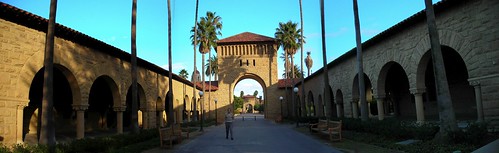
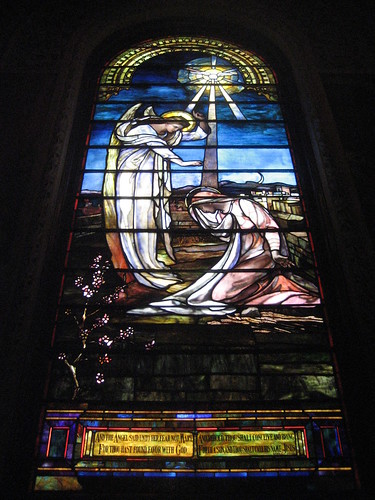
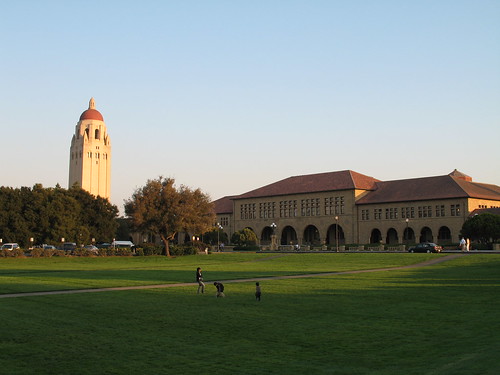
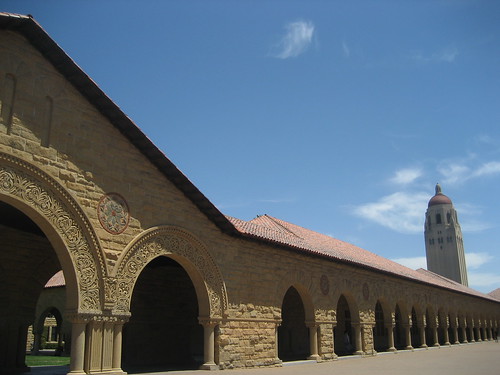
Rave: The Stanford Quad
In the spring of 1996, I made a return visit to campus, this time with admittance letter in hand. Partly due to legitimate conflict, partly due to my contrarian ways, I turned up on a Thursday night, a full week before admit weekend, and spent a quiet couple of days wandering around campus, mostly on my own, mostly not meeting anybody, students or professors.
During this visit, a funny thing happened, and that funny thing was that I fell in love with the campus. The grounds themselves - the gardens, the secluded patios, the abstract sculptures, and the strange and compelling post-modern buildings scattered on the outskirts of the Spanish colonial center of campus. It struck me as a wonderful place to be thoughtful.
Now, anytime I return to northern California after an absence, and with a few days on my hands, I drive down to campus and spend a couple of hours walking around. While the campus has many beautiful secrets scattered throughout, the most stunning is still the most prominent - the original Stanford Quad.
Walking around now is less an act of nostalgia then a momentary pause to reconnect with a truly special place - a testament to how buildings and architecture can really enrich our daily lives.
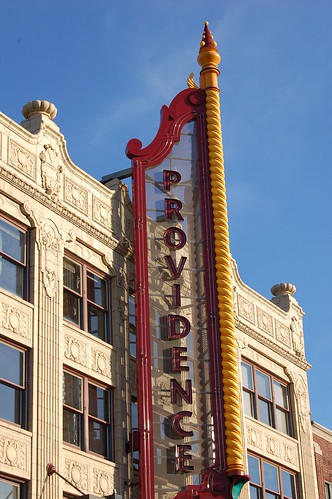
Photos of Providence Downcity
Thursday, May 24, 2007
Continued Laziness: Wired Digest
- the Miami "art collective" Friends With You. Their website is a little twee, their aesthetic hops between too-cute Japanimation whatever and glorious moments of effervescing psychotic joy, and their Rainbow Valley playground is awesome. Kids know when their worlds are rocking, right?
Tuesday, May 22, 2007
Dogfighting
Now, in the wisdom of the professional athlete, two Washington Redskins players decided to come to his defense, and the defense of backyard dogfighting. I don't really have an opinion on dogfighting - it seems inhumane, but I could be convinced of its place in the backwater cultural heritage of America, somewhere alongside bear-baiting. So this isn't about that. What I did enjoy was this tiny bit of sports reporting, including Clinton Portis' embrace of liberatarianism, Samuels' giggling, and their apparent secret knowledge of the sporting habits of prominent politicians. It does seem like they know something, right?
And on a different note, RM forwards me this excellent interview of Billy Graham by Woody Allen. Courtesy of mentalfloss magazine.In an interview with WAVY-TV, Portis said that if the Atlanta Falcons quarterback is charged and convicted of being involved in a dog fighting operation, then authorities would be "putting him behind bars for no reason."
"I don't know if he was fighting dogs or not," Portis said. "But it's his property; it's his dogs. If that's what he wants to do, do it."
Portis said dog fighting is a "prevalent" part of life.
Portis, a native of Laurel, Mississippi, added: "I know a lot of back roads that got a dog fight if you want to go see it. But they're not bothering those people because those people are not big names. I'm sure there's some police got some dogs that are fighting them, some judges got dogs and everything else."
"Politicians," added Samuels, who found it hard to keep from giggling while Portis was talking.
"Presidents," added Portis with a laugh.